Showing posts with label what I've been reading. Show all posts

Sunday, July 19, 2015

What I've Been Reading


Tripwire  by Lee Child. This tells the story of Jack Reacher, who is at least temporarily happy working in Key West, being reminded of his past Army life. A former colleague passes away, and Reacher happens to fall in love with his daughter, a lawyer in New York. (Jodie Garber is a character who will be referenced throughout at least the next few novels.) Some of the deceased's dangerous business ends up falling in Reacher's lap, and he has to go about making things right for himself and for Jodie.

Running Blind  by Lee Child. As of this writing, I have read six of the Jack Reacher books, and Running Blind  was in some ways the least enjoyable. I liked the beginning and middle of the story, but the "surprise twist" ending was not a surprise at all. I had expected it for a while at that point. Anyway, the book starts off in New York City with Reacher beating up a couple thugs, and it continues as a cross-country hunt for a serial killer of sexual assault victims.

Echo Burning  by Lee Child. I think someone mentioned in a previous iteration of "What I've Been Reading" that the series really took off with Echo Burning, and I have to agree. It seemed like this one was a little bit more personal and riveting than others. Jack Reacher ends up in the middle of nowhere in Texas (okay, places like Pecos and Echo) with a woman trying to get him to off her abusive/criminal husband.

Without Fail  by Lee Child. The momentum from Echo Burning  carries over into Without Fail, as the death of Reacher's brother comes back to haunt him a little bit. The Secret Service starts to receive threats toward the Vice President-elect, and Reacher gets pulled into the action. The reason I first heard of Jack Reacher was when the movie came out a few years ago based on One Shot, but Without Film  seems like the most filmable novel of the series so far.

A Drink Before the War  by Dennis Lehane. I had been on a bit of a Dennis Lehane run before I got hooked on the Jack Reacher books, so I took a bit of a break to return to the investigations of Patrick Kenzie and Angela Gennaro. The two private investigators get a job that has them looking for a politician's house cleaner who stole some important documents. Unfortunately, Kenzie figures out what the documents are and realizes that maybe they shouldn't be returned. I have yet to be disappointed by a Lehane book.

Study Hall: College Football, Its Stats and Its Stories  by Bill Connelly. I just started in on this one yesterday and only got through chapter one, which talks about the reasons why college football fans are so, well, fanatical. I'm looking forward to getting back into it, though.

Please leave your commentary or reading suggestions in the comment section.

Sunday, March 22, 2015

What I've Been Reading


America Again: Re-Becoming the Greatness We Never Weren't by Stephen Colbert. Written in the same style as I am America (And You Can Too!) as well as some Jon Stewart and Co.-written books in the past, Colbert's most recent book is another quite humorous attempt at making us look like idiots. I find that I can only really stand to read about half of each one of these books at a time before the writing style becomes a little too much for me to bear. They're well worth the read if you're looking for some entertainment to go along with your politics, but the sarcasm and double-speak are better digested in chunks.

David and Goliath  by Malcolm Gladwell. I have now exhausted the list of Malcolm Gladwell books, and I am kind of sad because of it. This one was his weakest effort, in my opinion, because the whole premise is based on underdogs taking down the kings of the hill. (Luckily, there was no mention of Appalachian State.) I did find Gladwell's story about David and Goliath interesting, because Biblical history has always piqued my curiosity. (Spoiler alert if you haven't read it: Goliath may have had a hormonal condition that caused him to be very large, but also somewhat dumb with poor vision.) However, I also got somewhat bored with his discussion of the Catholics and Protestants in Ireland, because basically, the whole damn thing is stupid. Basically, the message of the book is that sometimes advantages can be disadvantages, and disadvantages can be advantages. I did make some connections to football, because part of being a coach is motivating kids and convincing them they have a chance to succeed when the guys across from them might be bigger and/or faster.

Fire in the Hole  by Elmore Leonard. For no good reason at all, this was my first foray into the writing of Elmore Leonard. One would think that being from Michigan, I would have bothered to pick up one of his novels or short story collections earlier in my life. Heck, I never even bothered to watch any of the movies based on his books, but I have been watching Justified for several years. I finally decided to pick one up, and why not start with the group of short stories that involves Raylan Givens? The Givens story "Fire in the Hole" was predictably good, and there are some other solid efforts in there, too. I had not realized that Leonard would be so preoccupied with United States Marshals in general, but they're mentioned consistently throughout his stories. One thing I like about Leonard is that he does not mess around too much with descriptors and flowery speech. I went ahead and picked up Pronto, which I'll be starting soon.

Dexter's Final Cut  by Jeff Lindsay. Speaking of being sad, I finally finished the Dexter series of books. If you have not read the books and/or watched the entire series, you may want to stop reading here. This final Dexter effort has him working as a technical advisor for a cop show filming in Miami. He overextends himself to not only being a blood spatter analyst and serial killer, but also the bodyguard of a beautiful Hollywood actress. I don't want to give away the exact ending of the book for anyone who might glance too far down in this paragraph, but I will say that the book and the television series do not end on high notes. Dexter, Breaking Bad, and some other shows feature morally ambiguous protagonists, and I always hoped that Dexter and Walter White would somehow redeem themselves. People often ask me if the series end the way I want them to, but that's not really the point. If stories end how we want them, then there would be no point in anticipating a surprise ending. I actually found this book to be the most compelling Dexter novel of the series, but mostly because my feelings toward him had shifted from ambiguity to rooting against him.

What about you? Any reading suggestions for us?

Sunday, December 28, 2014

What I've Been Reading


Sharp Objects  by Gillian Flynn. I swear I didn't jump on the Gone Girl  bandwagon once it was optioned as a Ben Affleck movie, but it did get me hooked on Gillian Flynn . . . sort of. Sharp Objects  was the author's first book, and it seems like a little bit of an amateur effort. I appreciate Flynn's wit, but I thought this was a little Chuck Palahniuk Lite. The protagonist, Camille Preaker, is a newspaper writer outside of Chicago when she hears of a serial killer in her Missouri hometown. She's dispatched to Wind Gap, MO (which is not a real place) to follow the story. While there she deals with her hateful, cruel, rich mother (a woman of the type that probably does not exist), her promiscuous 13-year-old half-sister, and the gossip-fueled women of Wind Gap. In what's seemingly supposed to be a believable murder mystery, the story is thrown off by the ridiculous mother, the ridiculous sister, and the ridiculous protagonist herself. I had a hard time getting entranced by the story involving self-mutilators, 13-year-olds getting gangbanged, and a 30-year-old professional reporter dropping acid with her 13-year-old sister.

Blink  by Malcolm Gladwell. I've been on a Malcom Gladwell kick for the last several months, and the only book of his I have yet to read is David and Goliath. Blink  talks about humans' abilities to "thin slice," which is taking small amounts of information and making quick decisions. Some of the chapters talk about Pepsi vs. Coke taste tests, police interactions with suspects (which I find relevant to the Michael Brown/Darren Wilson situation in Ferguson, MO), judging the authenticity of works of art, etc. One portion I found relevant was where Gladwell talks to a tennis coach who has an uncanny ability to judge whether a tennis player is about to double-fault. Even the coach himself couldn't explain what body movements during a serve would help him judge the player's serve accuracy, but he's almost always correct. I found that somewhat applicable to my job as a coach and, to a lesser extent, my "job" here as a fan, blogger, and recruiting fanatic. Of course, I wouldn't claim to be right the vast majority of the time, but sometimes there just appear to be body movements that are or are not conducive to being successful in sports.

The Magician's Land  by Lev Grossman. I have previously touted the books The Magicians  and The Magician King  by Grossman on this here blog, and The Magician's Land  is the third installment, which was released late this summer. I am such a fan that I pre-ordered the book. I have never done that for a book before. The trilogy started off with a kid named Quentin Coldwater, who was recruited to a Hogwart's-like school. Quentin isn't The Chosen One like Harry Potter, but he's a pretty good magician who finds himself in some hairy situations, including traveling to a Narnia-like universe. I can't really put my finger on what I like about this series so much, but each of the books has been a page-turner to me. This third part of the trilogy concentrates on Quentin trying to bring the love his life back from the dead, as well as the possible extinction of Fillory (a.k.a. Narnia). If you like fantasy stuff at all, I highly recommend this series.

Guardians of the Galaxy: The Complete Collection Volume 1  by Dan Abnett and Andy Lanning. Unlike with Gillian Flynn and Gone Girl, I totally was not interested in these comics until I saw the movie this summer. The movie was so fun and interesting to me that I wanted to get some of the background. While the comics aren't quite as interesting to me - let's just say Chris Pratt is more entertaining on screen than Star-Lord is on the page - I still found them enjoyable. Also, I can deal with Rocket Raccoon as a main character, but Cosmo the telepathic Russian space dog is too over the top for me. Maybe that's why they didn't include him in the movie. It's just too much to handle at once. You mean there's a dog that talks? And not only does it talk, but it has supernatural powers? And not only does it talk and have supernatural powers, but it inserts a "k" sound whenever there should be a "g" sound? Okay, that's too much. I'm going to need some time to process this. Let's just start off with the raccoon who seems to be a candidate for NRA president.

You can check out my past "What I've Been Reading" posts here (LINK).

Monday, October 20, 2014

What I've Been Reading


Die Trying
  by Lee Child. I read Killing Floor  over the summer and enjoyed it enough to come back for some more Jack Reacher. In another edition of unbelievable coincidences, Reacher finds himself caught up in a kidnapping attempt that has nationwide implications. The multi-talented Reacher gets to use his sniper skills on several occasions, including a far-fetched competition with a criminal mastermind. If you can get past the premise of the whole story, it's an intriguing confluence of events. These are the cheap page-turners that are a reprieve from reading the daily newspaper, websites, or books like . . .

Columbine  by Dave Cullen. Like much of the country, I didn't learn a ton about the Columbine shootings after the national media moved on to other topics. What I took away from the story at the time was that a couple of bullied students took it upon themselves to avenge their unjust treatment, so they hunted down the jocks and preps that held them down in school. That's a bit of an oversimplification, but that was the general story line passed down at the time. From reading Cullen's account, that story is not only oversimplified, but totally inaccurate. The book talks about the erratic behavior of both Eric Harris and Dylan Klebold; the climate of the school before and after the event; the attack itself; and the community's response. Throughout the reading, I had an irrational hope that somebody would catch on to Harris and Klebold's plan and turn them in ahead of time. It's impossible to make sense of violence like this.

Outliers  by Malcolm Gladwell. This is the book that popularized the "10,000 Hour Rule," which suggests that people become great at something if they spend roughly 10,000 hours honing their skill. The most interesting chapter, to me, was "The Ethnic Theory of Plane Crashes," which reveals that the language used in airline cockpits can severely hamper the abilities of a flight crew. Korean co-pilots deferred to their superiors so much that when they noticed things going poorly, they would merely hint at something going wrong, rather than directly saying, "We need to take action now!" People were dying because Korean co-pilots were too polite. This was a great read.

The Tipping Point  by Malcolm Gladwell. This was another fascinating read from which all kinds of people with leadership positions might benefit. It talks about how small changes can cause sweeping improvements, supported by the story of how a cleanup operation of New York City's subway system helped deter crime citywide. I also enjoyed "The Stickiness Factor: Sesame Street, Blue's Clues, and the Educational Virus," which talks about how children can learn from educational television programs. Personally, I have never watched an episode of Blue's Clues, but it's interesting how much research goes into such a show.

What the Dog Saw  by Malcolm Gladwell. I really liked the other two Gladwell books, but I probably connected best with What the Dog Saw, a collection of articles. The book title stems from an article written about Cesar Millan, the "dog whisperer," and talks about how small movements and postures can be interpreted by dogs. I think this applies to humans, too, and a good first impression goes a long way. That first impression idea is also addressed in "Most Likely to Succeed." I am in the process of reading Blink  and I have yet to read David and Goliath, but Gladwell has quickly become one of my favorite authors. I held off on reading his stuff for a long time, but now I'm hooked.

You can check out some other reading suggestions in past installments of What I've Been Reading (LINK).

Saturday, September 6, 2014

What I've Been Reading

Donnybrook by Frank Bill. I thought I knew what I was getting into when I first read about this book. It was about some unsavory characters headed for a bare-knuckle Toughman competition in southern Indiana. I like MMA, and I like some dark undertones in my literature. I was unprepared. Not that I was offended by anything in Bill's first novel, but it's chockful of drug use, sex, people with disabilities, gory violence, incest, and other warped things that one usually associates with the state of Ohio. The characters are quite numerous - not as much as Game of Thrones, though - and some names are so odd (Jarhead, Chainsaw Angus, etc.) that I had a hard time keeping them straight at the beginning. The prose was designed to be rough, so it's not for anyone looking for the beauty of the English language. But when I was finished, I wanted to take a shower, so I guess the author did something right.

American Sniper  by Chris Kyle. Kyle was America's most accomplished sniper in history, making anywhere from 109 to 170 kills (kill totals are somewhat questionable in war). I say "was" because he was murdered by a fellow soldier he was trying to help after the book was released. Kyle was a Navy SEAL, and the first half of the book generally talks about his childhood, adolescence, and training. The second half goes through many of his operations during the Iraq war from 1999-2009. Scattered throughout are some insightful passages from his wife, who shares some of her perceptions of life with her husband overseas.

Gone, Baby, Gone  by Dennis Lehane. In Mystic River  Dave's wife said no one in real life would be clever enough to say "Your money or your life, bitch." But the dialogue in Gone, Baby, Gone  reminded me of some cheesy banter from The DaVinci Code. Realism does not seem to be Lehane's strong suit, but he does weave a pretty good story that can tug at the heart strings a little bit. If you haven't read this one (or seen the movie starring Casey Affleck and Morgan Freeman), it leaves you with an interesting choice about which outcome you would prefer. While I did enjoy the movie, it doesn't even begin to explore as much territory as the book.

Moonlight Mile  by Dennis Lehane. A sequel to Gone, Baby, Gone, I would not recommend it unless you're a Lehane fanatic. The story was uninspired and seemed to be trying too hard to make connections to its predecessor. The characters were disappointingly undeveloped and cliche, which made me hope for it to finish rather quickly. Luckily, it was a short read.

Boomerang  by Michael Lewis. I had not actually come across this book until I saw Lewis being interviewed on Conan  for his newer book, Flash Boys, which caused me to look up some of his lesser known works (everyone has heard of The Blind Side  and Moneyball). Boomerang  explains the financial busts in Greece, Iceland, and Ireland, and also talks about a seemingly inevitable bust for America. Of course, there have always been economic fluctuations, so the book doesn't recommend panic. The overall message, really, goes along with Malkiel's book (below) that suggests that short-term investments often result in long-term penalties.

The Elements of Investing  by Burton Malkiel. I originally purchased this book just to get a better grasp on investments in general. As an amateur investor, I am planning to retire in 30 or 40 or . . . 50 . . . maybe 60 years. You know, if Social Security lasts that long. We'll see. I've been investing in a Roth IRA for several years, but I wanted to see how they stack up against Traditional IRAs, 401ks, and the like. It was a worthwhile, short-but-sweet read for someone who's exploring the stock market and long-term investing, but there aren't a whole lot of particulars.

Savages  by Don Winslow. Sometimes I'm in the mood for a cheap thrill, and this time it came in the form of this book, which preceded the 2013 movie (LINK) starring Taylor Kitsch, Benicio Del Toro, John Travolta, Salma Hayek, and Blake Lively. It tells the story of a couple southern California guys who run an effective but small-ish illegal marijuana outfit. Naturally, they run afoul of a Mexican cartel, which leaves them overmatched as they fight for their business and their lives. The writing is humorous at times, but it has the flow of someone who has enjoyed a few blunts once in a while. There are lots of plays on words, several of which are stillborn. But there's enough here to make me think about going back to Winslow for a guilty pleasure sometime down the road.

Sunday, April 27, 2014

What I've Been Reading

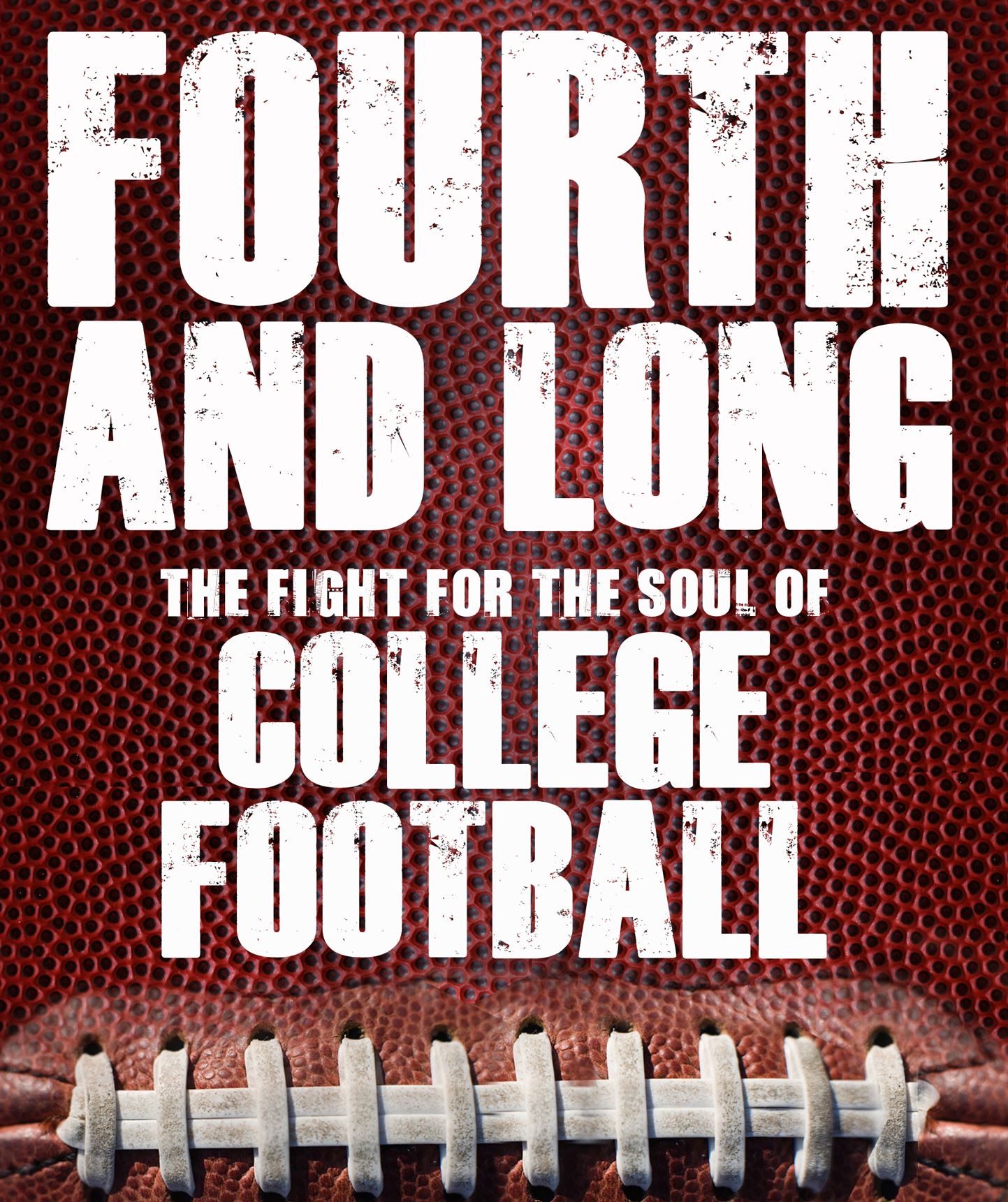
(image via Post-Gazette)
Fourth and Long  by John U. Bacon. I finally got around to reading Bacon's latest book, which follows Michigan, Northwestern, Ohio State, and mostly Penn State during their recent seasons. The book is mainly centered on PSU's tumultuous 2012 season in the aftermath of the Jerry Sandusky allegations, Joe Paterno's death, the NCAA sanctions, and Bill O'Brien's hiring. Bacon, a University of Michigan alum and former lecturer, also spends quite a bit of time looking at David Brandon's - and the Big Ten's - money grabs in recent years. Scattered throughout are some looks at Northwestern coach Pat Fitzgerald, whom Bacon respects a great deal, and OSU head coach Urban Meyer. The PSU stuff is the most inspiring, because it details coaches and players who were willing to work together toward a common goal. That contrasts with the views of Michigan, where Bacon seems to imply that Brandon has himself and the bottom line in mind more than the traditions at Michigan. It was a pleasurable and quick read, but you can tell that Bacon is trying to avoid stepping on any toes. After all, the last time he did so, the University of Michigan basically cut all ties to him following Three and Out. The lack of quality editing in Fourth and Long  is somewhat distracting, what with players and coaches referred to as "Mark Venric" (Northwestern's Venric Mark), "Gordon Melvin" (Wisconsin's Melvin Gordon), and "Ron Vanderlin" (Penn State linebackers coach Ron Vanderlinden), so be prepared. Following the two aforementioned books, Bacon's next piece will be titled Fifth and Short, the story of Tom Brady working his way up from the bottom of the depth chart and Tyrone Butterfield's place in Michigan lore.

The Great Gatsby  by F. Scott Fitzgerald. I've read this one before, but I decided to pull it out again for old time's sake. There's nothing new to say about the book that hasn't been said numerous times before, but I've always had trouble with how slowly the novel begins. It develops into a very intricate, delicate, and heartwarming love tragedy, but Fitzgerald wasn't really interested in grabbing the reader's attention off the bat.

Mystic River  by Dennis Lehane. I sort of stumbled into reading this one. I've never been much of one for crime thrillers, but I was in a spot with nothing to read, so I picked up this one and thought I could just leave off whenever I got the chance. But on the way to putting the book down, I discovered I couldn't. I had seen the movie several years ago (starring Sean Penn, Kevin Bacon, and Tim Robbins), but even though I knew the outcome, I wanted to see how the story developed. I thought the character of Dave Boyle (played by Tim Robbins in the movie) was extremely interesting. Dave, who had been kidnapped and molested at ten years old, still feels the effects of the crimes against him years into his adulthood - as a father, as a husband, as a friend. To me, the murder of Jimmy Marcus's daughter became an afterthought. I rarely say this about fiction novels, but this one has heart. You can't help feeling some pity for the characters involved.

Shutter Island  by Dennis Lehane. I cannot extol the virtues of this movie enough, but the book paled in comparison. The reverse was true for Mystic River (still a good movie, though). In case you're unfamiliar, the story follows Detective Teddy Daniels as he investigates the escape of an inmate from Shutter Island, a facility housing violent and mentally unstable criminals. Expounding on the plot might reveal too much, but if you have to choose, rent the film. Directed by Martin Scorsese, the acting and casting choices (Leonardo DiCaprio, Mark Ruffalo, Ben Kingsley, Max Van Sydow, Emily Mortimer, Jackie Earle Haley, Elias Koteas, etc.) are impeccable.

A Dance with Dragons  by George R.R. Martin. After reading this, the fifth volume in A Song of Ice and Fire, I felt like I was left with more questions than answers. Perhaps it's because the sixth book hasn't been released yet, but when I closed the book, I wanted more. With the other books, I knew all I had to do for more information was crack open the next novel, but I can't do that here. I appreciated that this book concentrated on some of my favorite characters (Tyrion Lannister, Jon Snow, Daenerys Targaryen) and mostly left out some of my least favorites (Brienne of Tarth, Jaime Lannister, Arya Stark), but I'm prepared for the sixth to bring them back into the fold.

A Feast for Crows  by George R.R. Martin. This is the fourth book in Martin's series. I'm leaving my mind open to the idea that the future novels might intertwine these story lines better, but the forays into Dorne and the Iron Islands seemed out of place to me. Obviously, Martin was able to connect them in some fashion, but they seem like filler at this point. I can safely say that A Feast for Crows  is my least favorite of the five novels so far, but it didn't stop me (nor should it stop you) from marching onward with the fifth book.

Damned  by Chuck Palahniuk. I typically like Palahniuk. One of these days, I will probably devote an entire post to my feelings on his various novels. But I have been disappointed with most of his recent efforts, including this one; I have tried and failed many times to suffer through Pygmy. In the style of Are You There, God? It's Me, Margaret by Judy Blume, Damned  tells the story of Maddy Spencer, a 13-year-old girl who dies of a marijuana overdose while her famous mom and dad are attending the Oscars. The premise is pretty funny (especially in the wake of Mitch McGary's banishment for smoking weed, but I digress), but I just had a tough time getting into this one. There are some good parts, like there are with almost all Palahniuk efforts, but the overall theme gets a little tiresome. I probably would have liked it better as a short story. There is a sequel, though, called Doomed, which I have yet to start.

Feel free to leave responses or reading suggestions in the comments or on the Book Suggestions page!

Friday, February 28, 2014

The Book List

She looks like a reader, right?
I have fielded comments, questions, and requests in recent weeks to suggest that at least a few people have similar reading tastes to mine, so I have provided a page at the top of the site (cleverly titled "Books I've Read") with a literature list. This is by no means an exhaustive list of my reading tastes, and it does not include books I read during childhood (when Matt Christopher was my homeboy) or for my professional life (because I like you and do not wish to put you to sleep).

My hope is that this will be a constant opportunity for you to look at book titles that might interest you, and it will be a constant opportunity for you to make reading suggestions for me and your fellow Touch the Bannerers.

Sunday, February 9, 2014

What I've Been Reading


The Lost Symbol  by Dan Brown. Occasionally, I get the feeling that I should go for a cheap thrill and read something like a Dan Brown novel, and a cheap copy of The Lost Symbol  that I found at a used book store on vacation fit the bill. It was just about what I expected. One thing I appreciate about Brown's work (I have also read The Da Vinci Code) is that it makes me think about the origin of certain cultural habits, buildings, writings, etc. In the novel, Robert Langdon is roped into saving his friend Peter Solomon's life by trying to uncover some secrets that will give the villain, Mal'akh, some kind of extraordinary powers. Even if some of his work is fictionalized history, it spurred me into finding out more about the Washington Monument, the Capitol, etc. As for the book itself, I grew somewhat tired of the main character, Langdon, sounding like an encyclopedia all the time. The dialogue is very stiff and can be grating, but that's clearly not Brown's strength, so I knew what I was getting into. It was a pretty quick read, but I was looking forward to the end so I could extract myself from the pretentious Langdon.

The Garden of Last Days  by Andre Dubus. I was unfamiliar with Dubus, who also wrote The House of Sand and Fog, before picking up Garden of Last Days  on somewhat of a whim. It had been on my reading list since I saw it on a "year's best novels" list in 2008, and I happened to find a copy through a co-worker. I usually don't get much reading done during football season, and this happened to be the first one I grabbed off the shelf following the season. It's a piece of fiction about a stripper in Florida named April who meets an unsavory character at work (who would expect that at a strip club?); when the babysitter was unavailable, she had to bring in her toddler daughter to spend the evening in the back room; and the daughter ends up getting kidnapped by an angry patron. All these events take place in Florida on the days leading up to September 11, 2001. Unlike Brown, Dubus does a great job of exploring the motivations behind his characters' actions. But if you're looking for big plot twists, this is not a book for you.

Sex, Drugs, and Cocoa Puffs  by Chuck Klosterman. This is a series of essays in which Klosterman uses cultural events from the 1980's, 1990's, and early 2000's as metaphors: Saved by the Bell, Tom Cruise, Star Wars, Lakers vs. Celtics, The Real World, etc. These are all things I grew up with, but I have to say that I've never thought this much about Saved by the Bell. The cynical Klosterman is going to grow up to be an angry old man, but in the meantime, I appreciate his explorations of serial killers and internet porn.

The Last Battle  by C.S. Lewis. I have mentioned this before, but as a kid, I never read any of Lewis's books. I was a heavy reader when I was younger, and I still read more than most of my friends, but I just never knew they existed, for whatever reason. Over the past couple years, I've read all seven Narnia books. Despite this being the climactic book, I found it somewhat disjointed and wished for some more involvement from the characters that had been developed in the earlier books. I was waiting for them to return, but either they never did, or they only did so briefly. I did enjoy the final battle scene, and I was curious to see Aslan's return and what waited behind the door of the stable. I was also looking forward to finishing the series so I can have a more complete grasp of Lev Grossman's series (The Magicians  and The Magician King, soon to be followed by The Magician's Land).

Moneyball  by Michael Lewis. Yeah, I'm late to the party, but I had just never gotten around to reading Moneyball. As we all probably know by now, it follows the story of Oakland Athletics general manager Billy Beane and how he used advanced statistics to level the playing field with big-spending clubs who used more traditional scouting methods. I did find the baseball portion of it enthralling, but the two themes that interested me most were a) Beane's willingness to flout tradition and b) his playing days as a phenom, which I thought related well to the college football recruiting industry that this here website tracks.

You can find my other reading suggestions here. Feel free to leave reading suggestions in the comments!

Sunday, May 5, 2013

What I've Been Reading


Await Your Reply  by Dan Chaon.  This had the feel of a book of short stories, because three separate characters follow three seemingly separate story arcs for the majority of the book.  It's not until near the end when you start to figure out how the three characters are connected to each other.  One is a girl who ran away with her high school teacher; another is a guy who's searching for his criminal twin brother; and the third is a Northwestern student who leaves school and gets involved in some shady business.

Gone Girl  by Gillian Flynn.  I read this book on the recommendation posted in the comments section from my last "What I've Been Reading" post, and it was a great read.  The perspective is unique, because chapters alternate between a wife's diary entries (prior to her murder) and the discovery by the husband and subsequent investigation, dealings with the police, media, etc.  I'm generally not a murder mystery type of reader, but this was a good one.  If I could only recommend one book out of this collection, this one would be it.

The Art of Fielding  by Chad Harbach.  This is by far the most literary sports-themed book I've ever read. The story revolves around a scrawny, slick-fielding shortstop who soars to college stardom, his gay teammate/roommate, his manly man of a catcher, and the university president.  It's a pretty funny read, but you may find yourself frequently having to stop and consult with a dictionary.  Even if you don't like to do that sort of thing, you should still read it, though.  It's that good.

Into the Wild  by Jon Krakauer.  I had been hearing about this book for a long time but never got around to reading it until recently.  Krakauer's books aren't the most entertaining reads, but I thoroughly enjoy the subject matter.  This one (in case you don't know already) tells the story of Christopher McCandless, a kid who grew up just outside of D.C., went to college in Atlanta, and then traveled the west coast as a vagabond until braving the Alaskan wilderness.  The Alaskan wilderness won.  I identified with McCandless because I, too, have occasionally had the desire to just disappear into the wilderness for a time.  I would grow tired of it soon and would likely die from getting eaten by a deer or something, but it would be very fulfilling to just get rid of the phone, the computers, the responsibilities, and just experience Earth in a completely foreign way.

Darkly Dreaming Dexter  by Jeff Lindsay.  I have been a fan of the television show Dexter  for years but just recently got into reading the books.  I generally don't like to read books after I already know the outcome, but the story lines from the television show vary greatly from the books.  Some of the characters are the same, but beyond that, it's like a whole new season.

Dearly Devoted Dexter  by Jeff Lindsay.  See above.

Inside Seal Team Six  by Don Mann.  With numerous family members, past and present, in the military, I saw this on the shelf and it piqued my interest.  It's a little bit sensationalistic.  As a former Seal Team Six member, Mann apparently included lots of material that was too sensitive to be released to the public.  Rather than excising that information, the publishers decided to black out the info, so there are entire paragraphs and essentially full pages that are blotted out.  Overall, the military stories are interesting, but the writer is full of himself and spends too much time talking about his troubled youth, as if people read this book to learn about him.  He probably could have divulged the same amount of pertinent information in about two-thirds of the space.

Feel free to leave reading suggestions in the comments section.  Thanks!

Sunday, December 2, 2012

What I've Been Reading


The Pleasures of Reading in an Age of Distraction  by Alan Jacobs.  Jacobs is a complete and utter nerd, so naturally, I enjoyed his writing.  The book largely discusses why we're interested in reading when there are so many other things to do - check e-mail, text our friends, get on Twitter or Facebook, etc.  He didn't reveal anything particularly groundbreaking, but he suggested that there was a time when we all enjoyed being read to as a child, when we could escape to another reality.  He also suggested lots of different ways to think about reading, including the idea that there are three ways of reading: reading for entertainment, reading for information, and reading for knowledge.  Jacobs likes to savor a good book, write notes in the margins, underline particular passages, etc., and those are things I never did except in college.  But it would be interesting to revisit that method of reading.  Also, I learned a new word: catholic.  I never knew that it could be a lower case word for "a wide variety of things, especially a person's tastes."

Before I Fall  by Lauren Oliver.  Don't ask why I read this, but Before I Fall  is a book geared toward teenage girls.  I'm not giving anything away, but the basic gist of the story is that the narrator - a popular girl in high school - dies in a car accident early in the story.  Much like Groundhog Day, she keeps reliving her final day on Earth, changing little (or big) things here or there in the hopes that she can be released from her purgatory.  It's a quick read, and it's actually pretty well written for being young adult fiction, but I don't imagine many of you will pursue it.

Tell-All  by Chuck Palahniuk.  This is the story of Hazie Coogan, the personal assistant to a famous actress named Katherine Kenton.  Katherine likes to think she's the boss, but it's really Hazie who's pulling all the strings.  Palahniuk's writing style is a little bit annoying; he keeps name dropping famous actors and actresses, which is cute at first but then grows tiresome.  There are elements of Palahniuk's Survivor  and Invisible Monsters  in here, but this book isn't nearly as strong as those two.

Of Mice and Men  by John Steinbeck.  Believe it or not, I never read this when I was in high school or college.  It's one of those books that you feel like you should have read by now, and if not, you're an idiot. Now I have read it; I am still an idiot.  However, I thoroughly enjoyed the book and read it over the course of about two days.  I had heard hints about how it ends, so it wasn't a surprise; but I can imagine that it would be even more powerful if I hadn't been expecting it.  The biggest surprise of the book was that it didn't bore me to death like The Grapes of Wrath  did.

Consider the Lobster  by David Foster Wallace.  I haven't read a ton of Wallace's stuff, but he's sort of hit-or-miss with me.  Some things I enjoy, and some bore me.  This is a collection of essays about various things like John McCain's election campaign, the lobster industry, conservative talk radio, the porn industry's AVN Awards, and Fyodor Dostoyevsky.  My personal favorite was the long discussion of the morality behind the preparation of lobsters.  The thing I like most about Wallace's is his ability to dig deep into the motivations of authors and people, parsing sentences and words and human actions.  However, don't pick up this book if you're looking for a quick read, because all the footnotes and interjections will slow you down.

Feel free to leave reading suggestions in the comments below.  I'm always looking for things to add my already endless reading list.

Saturday, September 29, 2012

What I've Been Reading

Pat Tillman, the subject of Where Men Win Glory
The Essential Smart Football  by Chris B. Brown.  If you're a frequent reader of the site (mine or his), then you know the basic gist of what you'll find in this book.  It's a collection of blog posts and essays by Brown on the various offenses and defenses being run by the NFL and college teams around the country.  For Michigan fans, there is plenty of discussion of Tom Brady and even a section on offensive coordinator Al Borges.  As a high school coach who's constantly trying to grasp new schemes and tweak old ones, I breezed through it in no time and want more.  Of course, it helps that the entire book is only 139 pages long.  And luckily, even though I want more, I just have to skip over to Smart Football  and see what's new.

Where Men Win Glory  by Jon Krakauer.  Ever since I read Under the Banner of Heaven  about a year ago, I've been on a Krakauer kick.  I read Into Thin Air  over the summer, and I just ordered Into the Wild. I know I'm behind the times a bit with reading some of these books, but oh well.  I was always fascinated by the story of Pat Tillman because I watched him in college and I liked watching him play for the Arizona Cardinals, who used to be my second favorite team (behind the Lions).  At the time that he left football for the Army, I couldn't imagine someone giving up a pro football career for a life of fighting in the desert.  It was admirable, of course, but it was a sacrifice of a lifelong dream.  Lots of athletes participated in earlier wars (World War II, Korea, etc.), but there was a time when being a pro athlete wasn't quite as glamorous.

A Clash of Kings  by George R.R. Martin.  I finished reading A Game of Thrones  a few months ago and immediately moved on to this one.  It seemed to get a bit of a slow start, but eventually picked up and turned into a good read by the end.  I hate to spoil the book for anyone reading or planning to read it, because there are all kinds of twists and turns for the various characters.  The longer this goes on, though, the more I like Tyrion Lannister.

A Storm of Swords  by George R.R. Martin.  Unlike its immediate predecessor, A Clash of Kings, this book started off fast-paced and ended the same way.  It seems like Martin really found his rhythm in this book, although by this point, I've started to catch on to his foreshadowing techniques and been able to make some pretty accurate predictions about what's coming down the pike.  Also unlike the previous books, this one ends on somewhat of a high note.  Things seem to be going in the right direction for the protagonists, and some of the villains are getting what they've had coming to them.

The Zombie Survival Guide: Recorded Attacks  by Max Brooks.  I am a nerd.

Sunday, May 6, 2012

What I've Been Reading


The Hunger Games  by Suzanne Collins.  I'm going to be honest.  I bought the book only because the movie was coming out and sometimes that's convincing enough to get me to purchase a book.  It was pretty well worth it.  You probably don't need a summary of what the book's about.  It's "every man for himself" if "man" means boy and girl teenagers.  I was a little surprised that it took so long to get to the actual games, but I guess some of the romance and fashion stuff was geared toward appealing to girls.  I just wanted to get to the competition.

In the President's Secret Service  by Ronald Kessler.  I'm a bit of a history nerd, so I thought this book was pretty interesting, even though it wasn't the most well written book.  By the end I was growing tired of Kessler's theme that the Secret Service is underfunded (I get it - agents don't get paid enough and their guns aren't state-of-the-art), but the anecdotal tidbits were fun.  For example, when President John F. Kennedy was assassinated in Dallas, the Secret Service only sent two agents ahead to scope out the parade route.  And despite my history nerdiness, I had not read the story of the assassination attempt on Harry Truman; a couple Puerto Rican nationalists made a pretty bold attempt to just walk into Blair House with guns blazing.

The Walking Dead  by Robert Kirkman.  I got into the series through a friend of mine who wouldn't stop talking about it and eventually let me borrow the books.  Basically, a rapidly spreading disease is turning everyone in the United States into zombies, and the story follows the few remaining survivors as they look for sanctuary.  The graphic novels are completely different than the TV series on AMC, with many of the same characters but lots of different story lines.  The two constants seem to be that a) nobody wants to lead but they all hate the way Rick leads and b) Lori is extremely annoying.  I hate Lori.  I wish she would die, but she's pregnant so she probably won't.

A Game of Thrones  by George R.R. Martin.  This book hooked me from the opening chapter.  There was a little bit of a lull about one-third of the way in, but after that it took off like a rocket.  At times Martin gets a little wordy - it seems every character, no matter how minor, needs a full physical description - but the story arcs and the way they intersect with each other are amazing.  I don't know how Martin keeps all of his characters straight.  His writing room must be filled with interwoven family trees of Starks and Lannisters and Targaryens.  I expected a little more of the supernatural to be involved, but other than some strange creatures beyond the wall and an interesting scene involving some dragon eggs at the end, it's mostly just a big, violent political drama.

Season of Life  by Jeffrey Marx.  This is the story of former Baltimore Colt defensive end Joe Ehrmann, who is a minister and used to serve as the defensive coordinator at the Gilman School in Baltimore.  That is, of course, the same school that 2013 defensive tackle Henry Poggi attends, and where Henry's father Biff is the head coach.  The author was a former ball boy for the Colts and met up with Ehrmann to get a peek inside the football program, where he and Poggi attempt to change the lives of their football players.  The story is a little bit cheesy, but it's a good overall message and there are some lessons to take away from it as a football coach.

Sunday, January 29, 2012

What I've Been Reading

The Magician King  by Lev Grossman is a must read for fantasy nerds who enjoy
pop culture references.

Bossypants  by Tiny Fey.  I'm not embarrassed to admit that I love Tina Fey.  The sarcastic and self-deprecating humor that was her forte on Saturday Night Live  and remains on 30 Rock  is apparent in her memoir.  She's just a genuinely funny writer and performer without the vulgarity of Sarah Silverman or the quirkiness of Maria Bamford.  And she doesn't make me think "How the hell did this woman get famous?" like I do when I see Kathy Griffin.  If you didn't enjoy Fey's turn as anchor on "Weekend Update," then Bossypants  isn't for you . . . but if you enjoy her humor and want more, then it's worth the read.

The Magician King  by Lev Grossman.  This is the sequel to a book I reviewed in 2010 called The Magicians.  It continues the story of Quentin Coldwater, a modern-day Harry Potter . . . minus the whole "Chosen One" theme.  Quentin is just one of many magicians who matriculate through Brakebills, a Hogwarts-style boarding school for magicians.  He starts off this novel as one of the four rulers of Fillory, a Narnia-like alternate universe.  He takes on an adventure through worlds and time, mostly because he's bored . . . but his adventure turns into a quest to save magic throughout the entire universe.  I thoroughly enjoy Grossman's writing, but unlike the initial volume in this series, he intertwines the story of Julia, a queen of Fillory who took a different path to royalty than Quentin did.  Julia's story, which takes up probably 25% of the novel, is largely boring and seemingly unrelated until the very end.  Grossman has a way of mixing a fun and exciting fantasy story with gruesome details that make it exciting to see what physical or emotional torment he'll come up with next.

The Girl with the Dragon Tattoo  by Stieg Larsson.  Okay, I'm a follower.  A few months ago, when I was vacationing in the Caribbean, every third person lounging on the beach or around the pool was reading this book.  I had heard bits and pieces about the plot and wasn't impressed, but I thought to myself, "I must be missing something."  After football season I snagged a copy and burned through the 640+ pages in about a week.  I normally like to learn new words or laugh during my reading, but I did neither for this one.  Well, I did learn a few new words, but they'll only ever do me any good if I take a class in Swedish Geography.  I did enjoy the plot and the three-mysteries-in-one nature of the book, but the hype was a little much.  Here's a brief plot synopsis: A disgraced journalist gets hired to investigate the 1966 disappearance of a millionaire's grandniece, and in the process of the investigation, an alternative rock girl is hired to help him out with some computer sleuthing.  Then everyone dies.  (Just kidding about that last part.  Or am I?  I'm not.)

Squirrel Seeks Chipmunk  by David Sedaris.  Acclaimed essayist Sedaris writes a series of stories involving hypocritical animals.  Yes, wild animals and barnyard animals are the vehicles for telling morality tales, using some generally accepted stereotypes about each species.  Some of the stories seem a little forced, and as the book goes along, Sedaris seems to run out of gas.  But the first few tales are worth reading, especially "The Toad, the Turtle, and the Duck," which made me laugh out loud.  I wouldn't buy this book if I were you, but if you see it sitting on someone's coffee table or have a couple minutes while browsing at Borders Barnes and Noble, it's worth the five minutes to read a couple tales.

Saturday, December 17, 2011

What I've Been Reading . . .

Jon Krakauer, a recently discovered favorite.

As I was reading my latest undertaking - Jon Krakauer's Under the Banner of Heaven - I started to come across the names of some places that had just recently entered my awareness, due to Michigan's recruitment of Salt Lake City (UT) Highland fullback Sione Houma.  The book is mostly about the history of the Mormon religion, Mormon Fundamentalism, and the things people do for their religion.  One of the proposed names for Utah Territory before it was established was "Deseret," which means "honeybee" in The Book of Mormon.  TTB Andrew and I mined the Deseret News  for weekly updates on Houma during his senior season; the paper happens to be owned by the church of the Latter-Day Saints.

Under the Banner of Heaven  by Jon Krakauer.  The frame for the book comes from the 1984 murder of Brenda and Erica Lafferty, the wife and 15-month-old daughter of Allen Lafferty.  Brenda and Erica were murdered by Allen's older brothers, whose polygamy and extreme Fundamentalist views were threatening the relationships and physical safety of many women and children in the Lafferty family.  Krakauer reveals the run-up to the murders while simultaneously explaining the origins of the Mormon religion, beginning with the "prophet" Joseph Smith in the early 19th century.  Having known very little about about Mormonism prior to picking up the book, I have found myself fascinated by how quickly and dangerously this off-shoot of Christianity has spread.

Three and Out
  by John U. Bacon.  Everybody and his brother has offered his thoughts on Three and Out, which is why I haven't posted in depth on my response to the book.  Bacon follows Rich Rodriguez throughout his three years at Michigan, while also detailing some interviews with others inside the program.  There's not much that gets revealed that devout Michigan fans didn't know already, but it's nice to get confirmation on some things that were thought to possibly just be internet rumors.  It's clear that Rodriguez was playing catch-up from the time he was hired and had a snowball's chance in Hell to be successful.  Rodriguez was somewhat guilty of failing to endear himself to Michigan people, especially with the way he got rid of so many Michigan staffers; rather than making appointments, workers who wanted to stay at Michigan had to wait in line to interview for a chance to keep their positions.  It was a great book for a Michigan fan to read, but only if you like torturing yourself.

The Neverending Story  by Michael Ende.  I'm not ashamed to admit that I still read children's books.  I watched the movie as a kid but never realized back then that The Neverending Story was actually a book.  It was surprisingly long and convoluted for a children's book, but it was pleasant nonetheless.  It's the story of a world that is slowly disintegrating because nobody reads the book anymore.  The only person who can save Fantastica is a fat, nerdy bookworm . . . like Manny from Modern Family.  Or me.

The Silence of the Lambs  by Thomas Harris.  This is an older book, but I was immediately transfixed by Anthony Hopkins' performance when I saw the film several years ago.  Unfortunately, I never got around to reading any of the books by Harris, but this past summer, I read Hannibal  and couldn't get enough.  True crime has always been interesting to me, and while I'm not particularly fond of fictionalized crime novels, the Hannibal Lecter series has me enthralled.  In case you're unfamiliar, a pathological serial killer in the form of Lecter helps a young FBI trainee find a fellow serial killer from behind bars.

The Death of Bunny Munro  by Nick Cave.  I've always been a fan of Cave's music (Murder Ballads, anyone?), but I was unimpressed by this literary effort.  I kept waiting for the story to go into overdrive because I admire Cave's lyrics, but the story just kind of floated along until the anti-climactic ending.  On the plus side, Cave did write the screenplay and soundtrack for The Proposition.  Maybe I'll just stick to watching his movies and listening to his songs about death.